
The Other Side of the Bridge

One of the things I love most about behavior is that dogs never stop teaching us. After all these years, I still find myself humbled by something unexpected every now and then. It is not necessarily because I didn’t understand the science behind it, but because a dog presents it in a way that I have never personally witnessed before.
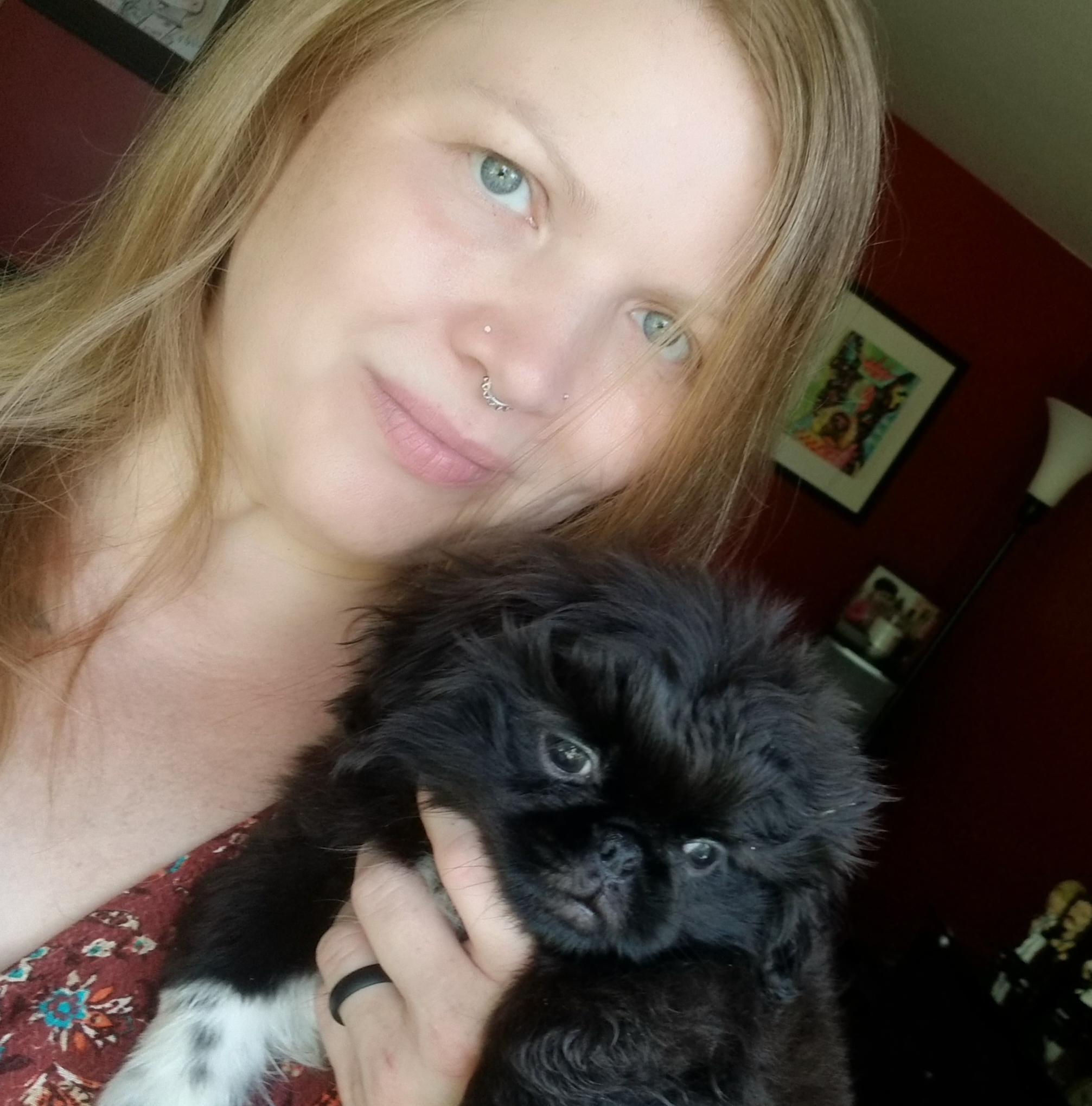
Neptune did exactly that this week.
If you have followed his journey, you know that Neptune can be profoundly fearful of unfamiliar people. He did not arrive here simply shy or cautious. He arrived carrying a tremendous amount of fear, and every new experience had to be approached thoughtfully. He has made incredible strides since then and is now amazingly comfortable within the household as it currently exists, but unfamiliar people remain extremely difficult for him.
We celebrate Neptune’s smaller victories because they are earned, not because they are especially dramatic. Watching him choose to investigate something on his own, relax enough to lie down near someone newer, or recover more quickly after something startles him tells me much more about his progress than whether he can simply tolerate a situation. Just today, we began doing some trick training. He jumped through a hoop and even pushed himself along on a skateboard. He continues to show us that beneath all of that fear is an intelligent, curious, remarkably resilient dog who is capable of so much when he feels safe enough to try.
Recently, Neptune’s response to two different introductions made me think more deeply about a concept I have used for years but had perhaps only considered from one direction. The concept is: Bridges.
When I use the word bridge, I am not referring to a clicker, a marker signal, or anything used to identify a particular behavior. I am talking about something that helps a dog connect to a person, place, object, or experience that would otherwise feel difficult, overwhelming, or unsafe. A bridge is not the destination itself. It is the thing that makes reaching that destination feel more possible.
That bridge can take many forms. It may be another dog, a familiar person, a predictable routine, a trusted environment, or even an object that has become associated with comfort and safety. What matters is not necessarily what the bridge is, but what it already represents to the dog. When it carries a history of familiarity, security, or trust, it can soften the emotional weight of something new.
I have used other dogs successfully as bridges many times, particularly with dogs who are deeply uncomfortable around unfamiliar people but genuinely enjoy the company of other dogs. That combination is not unusual. Some dogs move through the social world of other dogs with confidence and clarity while finding people confusing, intrusive, unpredictable, or frightening. Quite honestly, I cannot say I blame them. People really can be all of those things.
A dog may understand canine communication beautifully while struggling to make sense of human movement, direct eye contact, reaching, leaning, voices, and touch. Dogs often communicate discomfort in subtle ways, yet people tend to move directly toward them, stare into their faces, bend over them, extend a hand, or attempt to touch them before the dog has had enough time to decide whether the interaction feels safe. Even when those actions are well-intentioned, they can place an enormous amount of pressure on a dog who is already afraid.
For those dogs, another socially comfortable and confident dog can sometimes provide information that no amount of coaxing or exposure from a person ever could.
A human-fearful dog may not be ready to approach a stranger, but they may be very interested in the friendly dog standing beside that stranger. That interest creates an opening. Rather than asking the fearful dog to focus directly on the person, which may feel impossible in that moment, the dog is able to orient toward something they already understand and value. The other dog becomes the safer and more familiar part of the picture.
I have watched fearful dogs notice the dog first and then gradually begin to notice the person connected to that dog. The person is no longer simply an unfamiliar human standing in the environment. They are now the person holding the leash of a dog the fearful dog wants to meet, walk beside, sniff, or play with. That relationship can change the entire emotional context of the interaction.
The fearful dog is still aware of the person, of course, but the person is no longer the only thing that matters. The social dog provides another point of focus and another source of information. The fearful dog can observe the person indirectly, often from a more comfortable distance, while remaining engaged with something that feels more familiar and understandable.
This is where the bridge begins to do its work. The fearful dog sees the other dog moving comfortably near the person. They see that dog accepting proximity, following along, taking food, soliciting attention, or simply existing without visible concern. None of this means the fearful dog is consciously reasoning through the situation in the same way a human might, but they are absolutely learning from what happens around them. They are gathering information about what appears to predict danger and what appears to predict safety.
The other dog is not convincing them that every person is safe, nor are they curing the fear or overriding the fearful dog’s instincts. Instead, the dog is making the situation feel less unfamiliar and less direct. The fearful dog is being given an opportunity to observe without immediately becoming the center of attention.
Fearful dogs are often expected to engage long before they are ready. People call them, reach toward them, offer food from their hands, crouch down, stare, or otherwise attempt to make friends. The dog is suddenly responsible for managing the interaction while also trying to manage their own fear. A bridge can reduce some of that pressure because it allows the dog to enter the situation through something they already understand.
The fearful dog may approach because they want more information about the other dog. They may walk closer because they are moving with a social group. They may remain nearby because the presence of a familiar or friendly dog makes the environment feel more predictable. The person benefits from that connection without needing to force the interaction or ask the fearful dog for more than they are prepared to give.
I have seen this create subtle but meaningful changes. A dog who would ordinarily keep a wide distance from a stranger may choose to walk several feet closer because another dog is present. A dog who would bark continuously at a person standing alone may be able to disengage more easily when there is a social dog in the picture. A dog who would never consider investigating a person directly may begin by sniffing the ground where that person’s dog has walked and then move closer in small, manageable increments.
Those moments may look insignificant to someone who is only watching for a greeting, but they are not insignificant at all. They are part of the dog developing a new emotional relationship with the situation.
This is why I have found bridges so valuable. They create access without demanding immediacy. They allow a dog to learn through observation, proximity, and shared experience rather than pressure. They give the fearful dog another way into a situation that might otherwise feel impossible.
In many cases, the social dog becomes a kind of emotional reference point. The fearful dog may not trust the unfamiliar person yet, but they trust the information they are receiving from the dog beside them. That trusted dog is not formally giving permission or guaranteeing safety, but their ease matters. Their willingness to remain nearby matters. Their relaxed movement, body language, and engagement all contribute to the larger picture the fearful dog is trying to understand.
Over time, this can create a meaningful shift. The person who was once only frightening begins to exist within a safer context. The fearful dog may still need distance, time, and careful handling, but the path toward connection is no longer quite as difficult to see.
That is what I mean when I talk about a bridge. It is not a shortcut, and it is not a guarantee. It is simply something that helps the dog move from what they already know toward something they are not yet ready to trust.
I saw this very clearly with Neptune when I introduced him to my older daughter. Unfamiliar people are still incredibly difficult for him, and without the other dogs present, his response to her was much more reactive. Once he watched the dogs he had already come to know and trust greet her, however, the emotional picture began to change.
His housemates approached her comfortably, interacted with her naturally, and then went about their business. There was no concern or hesitation in their behavior, and nothing about the way they responded to her suggested that she was someone they considered dangerous.
Neptune watched them carefully. After observing for a while, he made the decision to approach her himself. He investigated quietly and, while she remained seated on the couch and allowed him complete control over the interaction, he even offered an appeasement lick to her hand before moving away.
That moment was not significant merely because he licked her hand. It mattered because he chose to gather more information about her after watching dogs he trusted demonstrate that they felt safe in her presence. The bridge was the relationship Neptune had already developed with the dogs around him. Their comfort gave him enough confidence to investigate someone who would otherwise have felt much more overwhelming.
That experience fit neatly into everything I had come to understand about bridges. The dogs Neptune trusted helped carry a feeling of safety toward someone he did not yet know.
Just a few days later, however, I watched the association appear to travel in the opposite direction.
Georgie is a regular lodging guest here and has already been integrated with my own dogs. When he arrived for another stay, I needed to introduce him to Neptune because they would be sharing space within the household. There was nothing especially unusual or calculated about the introduction. It was not intended as a training exercise, and I was not attempting to use Georgie to increase Neptune’s confidence. It was simply an introduction between two dogs who needed to be comfortable together during Georgie’s stay.
Georgie’s owner was still present when I brought the dogs into the yard. As soon as Neptune noticed her, his emotional response was immediate and intense. He barked heavily and made it abundantly clear that this unfamiliar person was far outside of his comfort zone.
That part did not surprise me, but what happened afterward kind of did.
Neptune has consistently shown us that dogs make far more sense to him than unfamiliar people do. He is very dog-tolerant and generally enjoys other dogs, so I expected him to settle into getting to know Georgie fairly quickly. Instead, he responded to Georgie with considerably more hesitation than I anticipated. Something about the interaction felt different from his other dog introductions.
The more I watched, the more it appeared that Georgie had become part of the frightening picture Neptune had formed in that first moment. Rather than Georgie acting as a bridge toward safety, the fear Neptune felt toward Georgie’s owner seemed to extend toward the dog who had arrived with her. In Neptune’s experience, Georgie was not initially just another unfamiliar dog. Georgie was connected to the frightening stranger.
I cannot know exactly what Neptune was thinking, and I would never pretend that I can. What I can do is observe his behavior, consider what we understand about associative learning, and look at how the pattern unfolded. In this case, it appeared that the connection itself had remained the same, but the emotional information traveling across it had changed. Instead of a trusted dog helping a new person feel safer, a frightening person appeared to make a new dog feel less safe.
Fortunately, that first impression did not define their relationship forever. Once Georgie’s owner left and the emotional picture changed, Neptune gradually began gathering new information about Georgie. Over the next several hours, the hesitation softened. They investigated one another more naturally, moved around the property together, and became increasingly comfortable sharing space. Before long, they were playing, resting near one another, and behaving exactly as I would have expected two compatible dogs to behave. Neptune eventually became very fond of Georgie, and I would genuinely describe them as friends.
What really stayed with me was not the eventual outcome, but how much longer it seemed to take them to reach it. Knowing what I now know about Neptune, I suspect their introduction would have unfolded more easily had Georgie first entered his world after the owner had already left. Had Neptune’s first impression simply been that another dog had arrived, he may have been able to form an opinion about Georgie without also trying to process an intense fear response toward an unfamiliar person.
Instead, Georgie’s arrival was initially wrapped inside that emotional experience. Before Neptune had an opportunity to learn who Georgie was independently, an association appeared to have already formed. Once the owner was gone, Neptune was able to gather new and more accurate information about Georgie, but it took longer because the first impression had already complicated the picture. These things matter so much in behavior.
As trainers and behavior consultants, we spend a tremendous amount of time thinking about reinforcement, timing, body language, thresholds, and management. Those things absolutely matter, but sometimes the smallest contextual details are the ones we overlook. Who was standing beside whom? What did the dog notice first? Which event happened immediately before another? What connections was the dog forming while we were focused on something else?
Dogs are not only learning about individual people, animals, places, and objects. They are also learning how those things relate to one another. Every experience becomes part of a much larger web of associations. Sometimes those associations help us in exactly the way we intended, while at other times they quietly work against us before we even realize they have formed.
Neptune reminded me that a bridge is simply a connection. We often think about bridges carrying confidence because that is the way many of us intentionally use them. We introduce a trusted dog, a familiar person, or a predictable routine in the hope that something unfamiliar will feel a little less overwhelming. What I had not fully appreciated until now was that the bridge itself does not determine what travels across it. The dog’s emotional experience does.
That realization does not mean I will stop using bridges. Quite the opposite, really. It means I will be more thoughtful about the circumstances in which those connections are formed. When possible, I will consider whether a new dog should be introduced separately from the unfamiliar person who brought them. I will pay closer attention to what is happening around the obvious trigger and ask whether another person, animal, object, or event may be becoming part of the same emotional picture.
One of the reasons I love behavior work so much is that the learning never stops. Every dog who comes through my door has something to teach me when I am willing to slow down and pay attention. Sometimes those lessons reinforce what I already understand, and sometimes they ask me to examine a familiar concept from a completely different direction.
Neptune’s friendship with Georgie ultimately developed exactly as I had hoped, but the path they took to reach that friendship taught me something very valuable that I will carry more thoughtfully into future introductions. It reminded me that behavior is rarely about one isolated moment or one obvious trigger. It is shaped by the relationships dogs discover between everything happening around them. When we pay attention to those relationships, rather than focusing only on the final outcome, we give ourselves a much better chance of understanding what the dog has been trying to tell us all along.


Comments